If you’re running ads in 2025, there’s a good chance you’ve seen this problem.
Your ads are getting clicks.
Traffic is coming in.
The dashboard looks active.
But sales are not moving the way you expected.
Leads feel low quality.
Forms are filled, but follow-ups go nowhere.
Revenue does not match the ad spend.
This is one of the most frustrating situations for any business owner or marketer. You start questioning everything. The ads, the platform, the audience, the budget. But in most cases, the problem is not your ads.
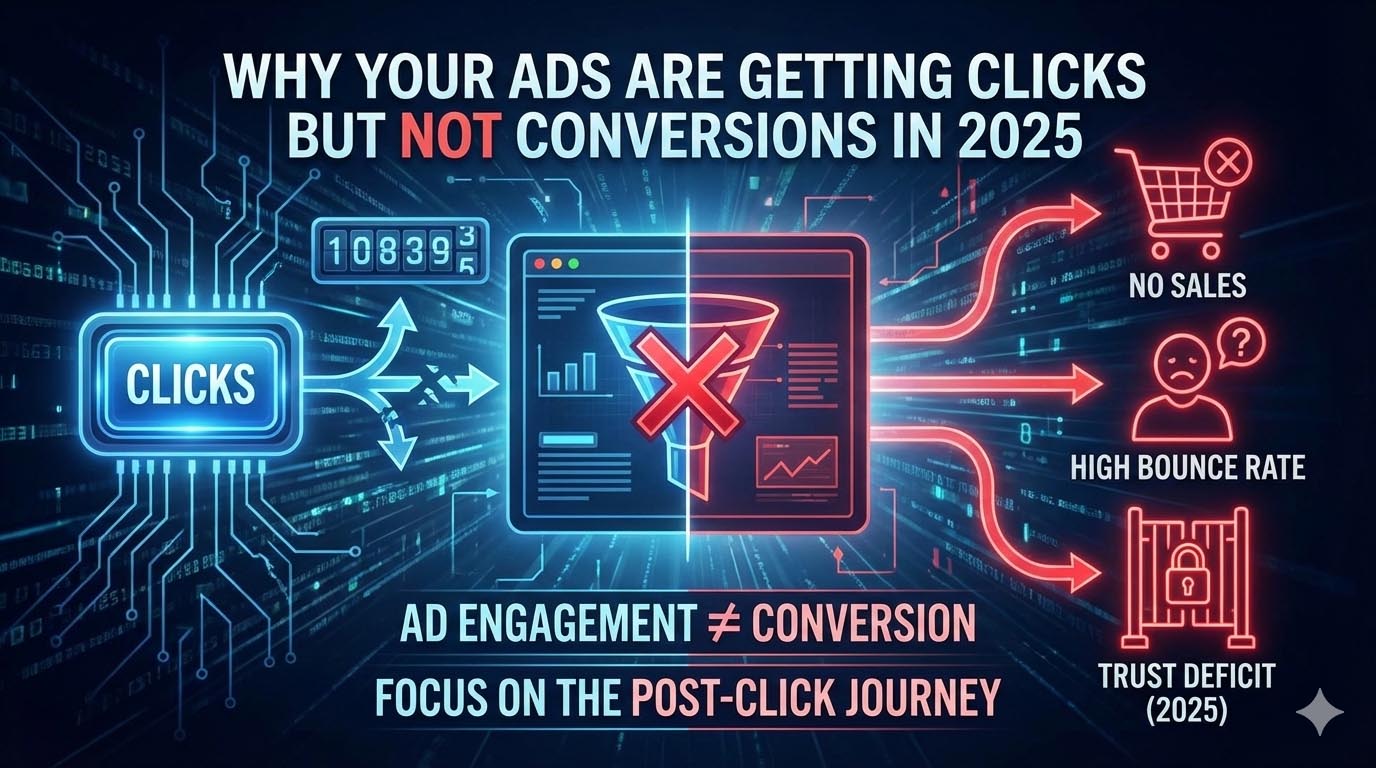
The problem is what happens after the click.
Let’s break down why this happens so often in 2025 and what smart brands are doing to fix it.
1. Clicks Do Not Mean Intent Anymore
A few years ago, a click usually meant interest.
In 2025, a click often means curiosity.
People click because:
- The headline caught their attention
- The creative looked interesting
- They wanted to “check it out”
- They were scrolling mindlessly
- They planned to come back later
None of these reasons guarantee buying intent.
Platforms optimize for engagement first. If your creative is strong, it will attract clicks. But clicks alone do not tell you whether someone is ready to convert.
This is why many businesses see high CTR but low conversions.
Attention is cheap. Intent is rare.
If your funnel does not guide users from curiosity to confidence, conversions will always lag behind clicks.
2. Ad Promise vs Landing Page Reality
This is one of the biggest conversion killers.
Your ad makes a promise.
Your landing page must continue that exact story.
But most landing pages do not.
Common problems include:
- The headline on the page does not match the ad
- The offer changes slightly
- The pricing feels different than expected
- The benefits are unclear
- The page feels generic or outdated
When this happens, users feel confused. Confusion leads to hesitation. Hesitation leads to exits.
In 2025, people decide within seconds whether to stay or leave. If the landing page does not immediately reassure them that they are in the right place, the click is wasted.
The best-performing brands ensure that:
- The headline continues the ad message
- The first section clearly explains the value
- The offer is simple and transparent
- There are no surprises
Consistency builds confidence. Confidence drives conversions.
3. Too Many Options Kill Decisions
Many businesses believe that more information equals better conversions.
In reality, more information often leads to no decision at all.
Landing pages overloaded with:
- Multiple CTAs
- Long feature lists
- Too many plans or packages
- Complicated pricing
- Endless sections
create mental overload.
When users have to think too much, they leave.
In 2025, the most effective pages are simple and focused. They guide users toward one primary action.
Ask yourself:
- What is the one thing I want the user to do?
- Is everything on the page supporting that action?
- Or is it distracting them?
Reducing friction increases conversions far more than adding features.
4. Lack of Trust Is the Silent Conversion Killer
Clicks happen fast. Trust takes time.
Most users do not convert because they are unsure. They wonder:
- Is this brand legitimate?
- Will this product actually work?
- What if something goes wrong?
- Are there real customers behind this?
If your landing page does not answer these questions, users leave without converting.
In 2025, trust assets are not optional. They are essential.
High-converting pages include:
- Real customer reviews
- Testimonials with context
- Before and after results
- Clear guarantees
- Transparent contact information
- Simple explanations of how things work
People do not need perfection.
They need reassurance.
5. Mobile Experience Is Where Most Conversions Die
Most ad clicks today come from mobile devices.
Yet many landing pages are still designed for desktop.
Common mobile issues include:
- Slow loading speed
- Tiny text
- Hard-to-click buttons
- Long forms
- Pop-ups blocking content
If your page is frustrating on mobile, users will leave immediately.
In 2025, mobile optimization is not a bonus. It is the baseline.
Your page should:
- Load in under 3 seconds
- Be easy to read without zooming
- Have clear CTAs
- Keep forms short and simple
Fixing mobile issues alone can dramatically improve conversions without changing your ads.
6. Wrong Expectations Create Wrong Leads
Sometimes the problem is not the landing page.
It is the expectation set by the ad itself.
If your ad attracts people who are:
- Price-sensitive when you sell premium
- Curious but not serious
- Looking for free information
- Outside your target market
you will get clicks but no conversions.
Smart marketers filter users early.
They use:
- Clear pricing cues
- Strong qualifiers in the copy
- Honest messaging
- Clear target audience signals
This reduces low-quality clicks and improves conversion quality.
Fewer clicks with higher intent are always better than more clicks with no results.
7. The Follow-Up Gap Most Brands Ignore
Conversion does not always happen instantly.
Many users need:
- A reminder
- A second look
- Additional reassurance
- Time to think
If your brand does not follow up properly, these users disappear.
Smart brands use:
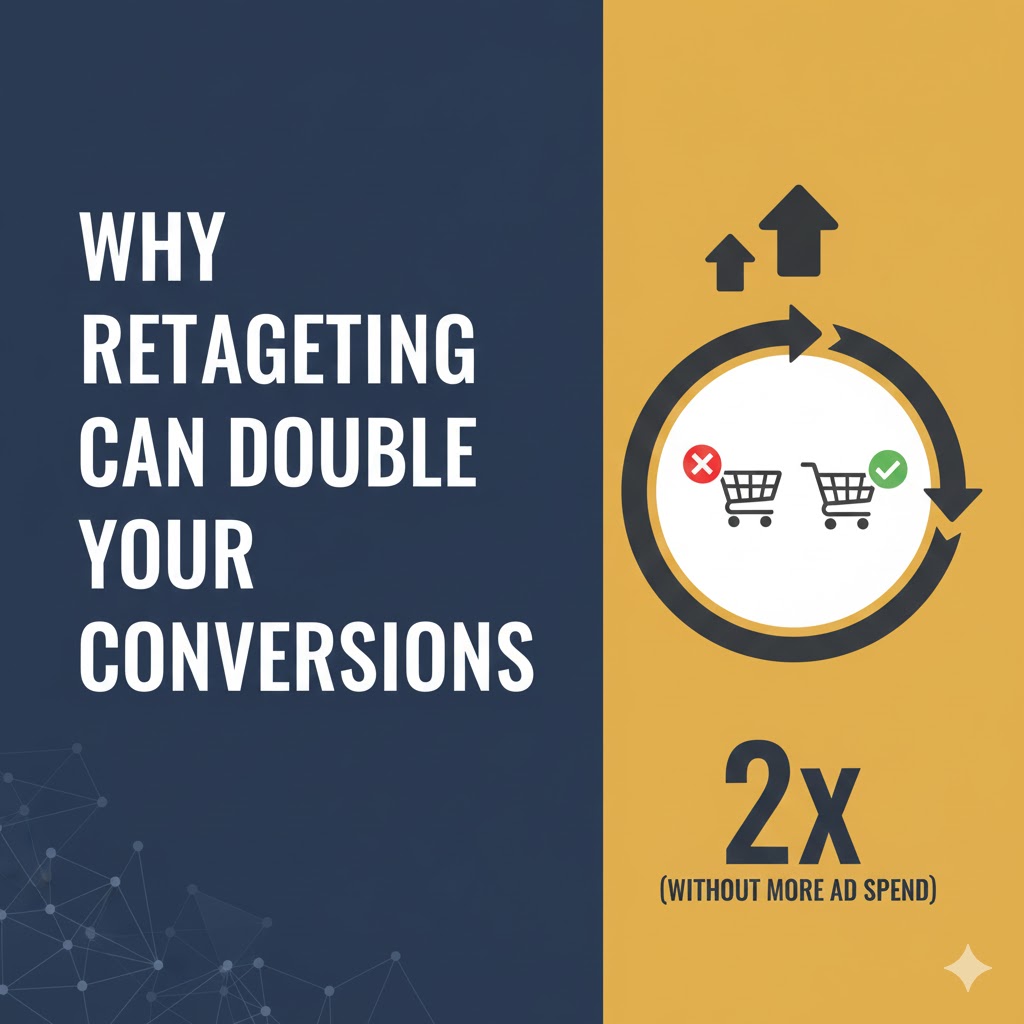
- Remarketing ads
- Email follow-ups
- WhatsApp reminders
- Retargeting with social proof
- Time-based offers
The conversion often happens on the second or third interaction, not the first.
If you rely only on immediate conversions, you miss a large part of your potential revenue.
Final Thought
Clicks are not the goal.
Conversions are not even the real goal.
The real goal is clarity and confidence.
In 2025, ads bring attention. Funnels build trust. Landing pages remove friction. Follow-ups close the gap.
If your ads are getting clicks but not conversions, do not panic.
Look deeper.
Fix what happens after the click, and performance will improve naturally.